Introduction
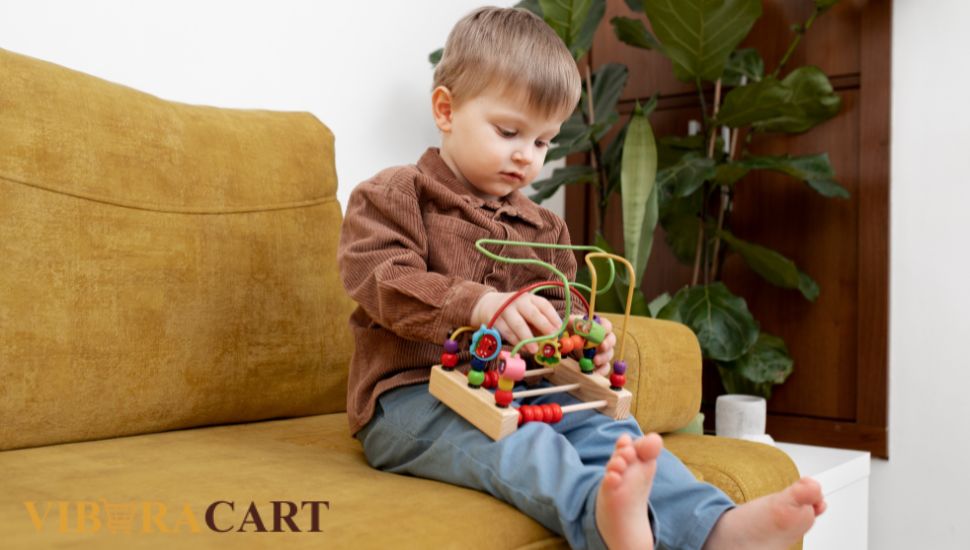
In the early years of childhood, every interaction, movement, and experience contributes to brain development. Parents today are increasingly looking for educational toys that not only entertain children but also support learning and mental growth. One of the most effective tools for early childhood education is wooden puzzle toys for cognitive development.
These simple yet highly engaging toys help children improve problem-solving abilities, memory, focus, creativity, and logical thinking. Unlike many electronic toys that provide passive entertainment, wooden puzzle toys encourage active participation and hands-on learning.
As modern parenting shifts toward mindful and screen-free learning experiences, wooden puzzles continue to stand out as timeless educational tools that support healthy cognitive growth.
What Are Wooden Puzzle Toys ?
Wooden puzzle toys are educational play tools made from natural wood materials that challenge children to think critically and solve problems. They come in many forms, including:
- shape sorting puzzles
- alphabet puzzles
- number puzzles
- animal matching boards
- stacking puzzles
- 3D cognitive puzzles
These toys are intentionally designed to stimulate a child’s brain while improving motor coordination and concentration.
Why Cognitive Development Matters in Early Childhood
Cognitive development refers to how children think, learn, remember, and solve problems. During the first few years of life, the brain develops rapidly, forming neural connections that shape future learning ability.
Activities that stimulate the brain during this phase can significantly improve:
- memory retention
- attention span
- logical reasoning
- language skills
- creativity
- decision-making ability
Wooden puzzle toys provide the type of interactive learning experience that supports these critical developmental areas naturally.
How Wooden Puzzle Toys Improve Cognitive Skills
1. Problem-Solving Ability
Every puzzle encourages children to analyze shapes, sizes, and patterns before making decisions. This strengthens critical thinking and logical reasoning skills.
For example, when a child tries to fit a wooden shape into the correct slot, the brain processes:
- visual recognition
- spatial understanding
- trial-and-error learning
This repeated process builds stronger cognitive flexibility.
2. Memory and Concentration Enhancement
Puzzle-solving requires children to remember patterns, positions, and sequences. This improves:
- short-term memory
- concentration levels
- mental focus
Children who regularly engage with puzzles often develop longer attention spans compared to passive entertainment activities.
3. Fine Motor Skill Development
Wooden puzzle pieces help children improve:
- hand-eye coordination
- finger control
- grip strength
These skills are essential for writing, drawing, and daily activities later in life.
4. Sensory Learning Experience
Unlike plastic toys, wooden puzzles provide natural textures and tactile feedback that enhance sensory learning.
Children engage multiple senses simultaneously:
- touch
- sight
- movement
- spatial recognition
This multi-sensory learning experience strengthens brain connections more effectively.
Montessori Learning and Wooden Puzzle Toys
Many wooden puzzle toys are inspired by the Montessori method, which emphasizes:
- independent learning
- hands-on exploration
- self-correction
- creativity
Montessori-based puzzle toys encourage children to solve problems independently rather than relying on instructions or digital automation.
This builds:
- confidence
- independence
- curiosity
- decision-making ability
Benefits of Screen-Free Learning Toys
In today’s digital environment, children are exposed to screens at increasingly younger ages. While technology has benefits, excessive screen time can affect focus and attention development.
Wooden puzzle toys provide a healthier alternative by:
- encouraging active learning
- reducing digital dependency
- improving real-world interaction
- supporting mindful play
Parents are now prioritizing screen-free educational tools to create a balanced learning environment at home.
Best Types of Wooden Puzzle Toys by Age
1–2 Years
- shape sorting puzzles
- knob puzzles
- simple stacking toys
Focus: sensory exploration and motor coordination.
3–4 Years
- alphabet puzzles
- animal matching games
- color recognition puzzles
Focus: language and memory development.
5+ Years
- advanced logic puzzles
- number puzzles
- 3D wooden brain teasers
Focus: strategic thinking and advanced problem-solving.
How Parents Can Use Wooden Puzzle Toys Effectively
To maximize learning benefits:
- allow children to solve puzzles independently
- avoid giving immediate answers
- encourage exploration and curiosity
- rotate puzzles regularly to maintain interest
- create a calm and distraction-free play environment
Parental encouragement combined with independent discovery creates the strongest learning outcomes.
Eco-Friendly and Safe Learning Choice
High-quality wooden puzzle toys are often:
- made from sustainable wood
- painted with non-toxic colors
- free from harmful chemicals
This makes them safer for toddlers and environmentally friendly for conscious parents.
AI Era Parenting and Hands-On Learning
As AI and digital technology continue to reshape education, many parents are searching for balance. Wooden puzzle toys offer something technology cannot fully replace:
- physical interaction
- sensory development
- emotional engagement
- real-world problem-solving
The future of learning will likely combine smart technology with hands-on cognitive activities to create healthier developmental experiences.
Conclusion
Wooden puzzle toys for cognitive development are more than simple playthings—they are powerful educational tools that shape how children think, learn, and grow. By improving memory, concentration, problem-solving, and motor skills, these toys provide a strong foundation for lifelong learning.
In a world increasingly dominated by screens and digital distractions, wooden puzzles bring children back to meaningful, hands-on experiences that nurture creativity, intelligence, and confidence naturally.
For parents seeking educational, safe, and development-focused toys, wooden puzzle toys remain one of the smartest investments in a child’s future.
FAQs
Q1: How do wooden puzzle toys help cognitive development ?
They improve memory, problem-solving, concentration, logical thinking, and hand-eye coordination through interactive learning.
Q2: Are wooden puzzle toys safe for toddlers ?
Yes, quality wooden puzzles are made with non-toxic materials and child-safe finishes.
Q3: What age is best for puzzle toys ?
Puzzle toys are beneficial from 1 year onward, with different complexity levels for each age group.
Q4: Do puzzle toys improve intelligence ?
They help strengthen cognitive skills and brain development, which supports overall learning ability.
Q5: Why are wooden toys better than plastic toys ?
Wooden toys provide better sensory experiences, durability, and eco-friendly benefits while encouraging focused play.