Introduction
In today’s digital world, parents are searching for healthier and smarter ways to support child development without relying only on screens. Educational wooden toys for kids have become one of the most trusted choices for families who want safe, creative, and meaningful play experiences.
Unlike plastic toys filled with lights and sounds, wooden toys encourage imagination, hands-on learning, and long-lasting engagement. From wooden puzzles and stacking blocks to Montessori-inspired activity sets, these toys help children develop cognitive, social, and motor skills naturally.
Parents, teachers, and child development experts now recommend wooden educational toys because they support open-ended learning while creating a calm and focused play environment.
Why Wooden Toys Are Making a Comeback
Wooden toys are no longer considered old-fashioned. Modern parents appreciate their durability, eco-friendly materials, and educational value.
Many families are now moving toward:
- Non-toxic wooden toys
- Eco-friendly learning toys
- Montessori educational tools
- Sustainable toy brands
- Screen-free activities for children
Wooden toys also last longer than plastic alternatives. They can be passed from one generation to another, making them a smart long-term investment.
Benefits of Educational Wooden Toys for Kids
1. Improves Cognitive Development
Wooden puzzles, shape sorters, and counting toys help children improve problem-solving abilities and logical thinking.
Kids learn:
- Pattern recognition
- Memory skills
- Decision-making
- Spatial awareness
These activities strengthen brain development during the early learning years.
2. Enhances Fine Motor Skills
Simple activities like stacking blocks, threading beads, or balancing wooden pieces help improve hand-eye coordination and finger control.
This is especially important for:
- Writing preparation
- Grip strength
- Daily life skills
3. Encourages Creative Play
Wooden toys allow children to use imagination instead of depending on electronic instructions.
For example:
- Wooden kitchen sets inspire roleplay
- Building blocks create imaginative worlds
- Wooden animal toys encourage storytelling
Creative play helps children express emotions and build communication skills.
4. Supports Emotional Development
Educational wooden toys often create calmer play experiences compared to loud electronic toys.
Children become:
- More focused
- More patient
- Better at independent play
This also helps reduce overstimulation and excessive screen dependence.
Best Types of Educational Wooden Toys
Wooden Building Blocks
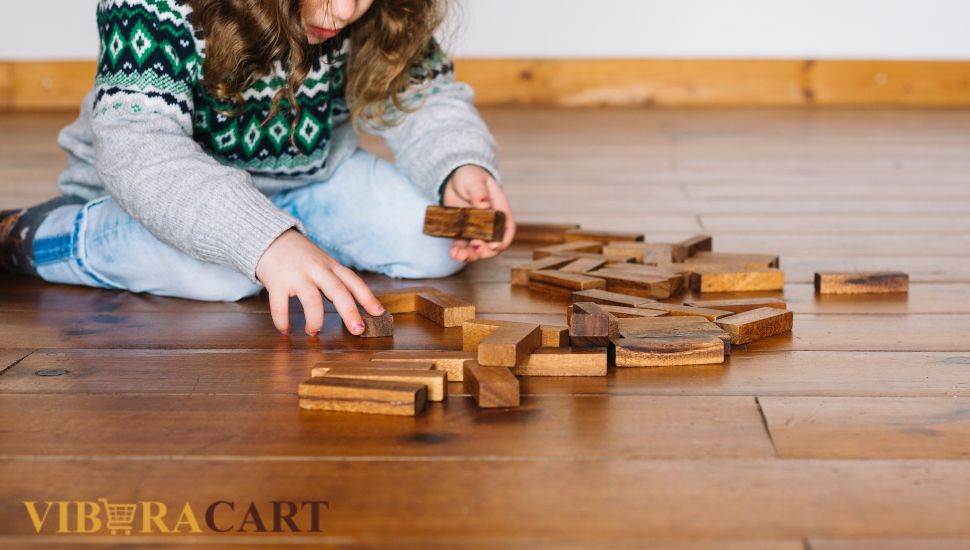
Building blocks remain one of the best educational toys for preschoolers. They help children understand balance, geometry, and creativity.
Popular options:
- Natural wooden blocks
- Magnetic wooden blocks
- Alphabet building cubes
Wooden Puzzles
Wooden puzzles improve concentration and logical thinking.
Examples include:
- Animal puzzles
- Alphabet puzzles
- Number puzzles
- Geography puzzles
Montessori Wooden Toys
Montessori toys focus on independent learning and practical life skills.
Common Montessori wooden toys:
- Shape sorters
- Counting rods
- Busy boards
- Stacking rings
Wooden STEM Toys
STEM wooden toys combine science, technology, engineering, and math learning through hands-on activities.
Popular examples:
- Wooden engineering kits
- Marble run sets
- Gear construction toys
- Wooden coding games
Montessori and Waldorf Learning Through Wooden Toys
Both Montessori and Waldorf education systems strongly support natural materials and imaginative learning.
Montessori Philosophy
Focuses on:
- Independence
- Problem-solving
- Practical learning
Waldorf Philosophy
Encourages:
- Creativity
- Nature-based play
- Emotional growth
Wooden toys fit perfectly into both learning methods because they are simple, sensory-friendly, and open-ended.
How Wooden Toys Improve Child Development
Educational wooden toys help in multiple developmental areas.
| Development Area | Benefits |
|---|---|
| Cognitive Skills | Problem-solving and memory |
| Motor Skills | Hand-eye coordination |
| Social Skills | Cooperative play |
| Emotional Skills | Patience and confidence |
| Creativity | Imaginative storytelling |
Experts in early childhood education often recommend combining educational play with free exploration for better learning outcomes.
Choosing Safe and Non-Toxic Wooden Toys
Safety should always be the top priority when buying toys for kids.
Look for:
- BPA-free materials
- Water-based paints
- Smooth edges
- FSC-certified wood
- Child-safe finishes
Avoid toys with:
- Sharp corners
- Toxic chemicals
- Loose small parts for toddlers
Trusted brands usually provide safety certifications and age recommendations.
Educational Wooden Toys by Age Group
For Toddlers (1–3 Years)
- Stacking rings
- Shape sorters
- Pull-along toys
For Preschoolers (3–5 Years)
- Alphabet puzzles
- Counting toys
- Pretend play kitchen sets
For Elementary Kids (5–8 Years)
- STEM construction kits
- Math learning boards
- Strategy games
Choosing age-appropriate toys improves both safety and learning effectiveness.
STEM Learning with Wooden Toys
STEM education is becoming more important in modern schools. Wooden STEM toys help children learn through experimentation and creativity.
Benefits include:
- Engineering thinking
- Basic math concepts
- Scientific curiosity
- Problem-solving confidence
Many parents now combine wooden STEM toys with homeschooling and early coding education.
Sustainable and Eco-Friendly Play Options
Sustainability is one of the biggest reasons parents choose wooden toys.
Eco-friendly wooden toys:
- Reduce plastic waste
- Last longer
- Use renewable materials
- Support environmentally conscious parenting
Sustainable toys also teach children about responsible living and caring for nature.
Tips for Parents Buying Wooden Toys Online
Before purchasing educational wooden toys online, consider:
Read Product Reviews
Check customer feedback for durability and safety.
Verify Safety Standards
Look for ASTM or CE certifications.
Compare Learning Features
Choose toys that match your child’s developmental stage.
Prioritize Open-Ended Play
The best toys encourage creativity instead of fixed outcomes.
Future of Educational Toys in the AI Learning Era
As artificial intelligence changes education, educational toys are also evolving.
Modern trends include:
- AI-assisted learning toys
- Smart educational systems
- Interactive STEM experiences
- Personalized learning activities
However, wooden toys continue to remain valuable because they provide tactile learning and real-world sensory experiences that screens cannot fully replace.
The future of child education may combine:
- Traditional wooden learning tools
- AI-powered educational platforms
- Hybrid smart play experiences
This creates balanced development for modern children.
Final Thoughts
Educational wooden toys for kids are more than simple playthings. They help children build creativity, confidence, motor skills, and lifelong learning habits in a natural and engaging way.
As parents continue searching for safer, smarter, and more sustainable learning solutions, wooden educational toys remain one of the best investments for child development.
Whether you choose Montessori blocks, STEM construction kits, or classic wooden puzzles, the right toy can inspire curiosity, imagination, and meaningful growth for years to come.
FAQs
Are wooden toys better than plastic toys ?
Wooden toys are often more durable, eco-friendly, and supportive of imaginative play compared to many plastic toys.
What age are educational wooden toys suitable for ?
Educational wooden toys are available for all age groups, from toddlers to elementary school children.
Are wooden toys safe for toddlers ?
Yes, high-quality wooden toys made with non-toxic materials and smooth finishes are safe for toddlers.
What are the best educational wooden toys for preschoolers ?
Popular options include alphabet puzzles, counting boards, stacking blocks, and pretend play sets.
Do wooden toys help with brain development ?
Yes, wooden toys improve cognitive skills, creativity, problem-solving, and fine motor development.
Are STEM wooden toys effective for learning ?
STEM wooden toys help children develop engineering, math, and critical thinking skills through hands-on learning activities.